
 Published by
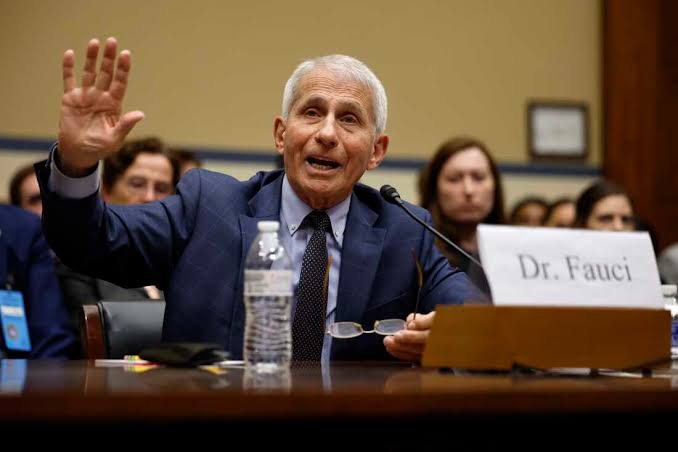
A new twist in the Fauci affair. On August 10, 2026, Republican Senators Ron Johnson and Rand Paul released messages extracted from Anthony Fauci's work phone. In these exchanges, dated January 2021, the former director of the NIAID discussed with other senior health officials a theoretical risk of miscarriage linked to the COVID-19 vaccine in pregnant women during the first trimester. A few days later, he publicly stated that no warning signs had been identified. These revelations, which come after the August 6th vote of contempt in Congress, reignite the debate on the transparency of health authorities and informed consent. Here are the facts, and the essential context to understand them.
What text messages really say
The messages come from an exchange held on January 25 and 26, 2021, between three key figures in the American health response: Anthony Fauci, Rochelle Walensky, then director of the CDC, and Vivek Murthy, future Surgeon General in the Biden administration. They are part of a collection of more than 34,000 text messages and 522 voicemails obtained by the Senate Homeland Security Committee as part of its investigation into the handling of the pandemic.
In the central message of the case, Fauci wrote that he had consulted his contacts and alerted his colleagues: many people were experiencing a high fever and a significant inflammatory reaction after the second dose, a reaction that could theoretically be associated with a first-trimester miscarriage. Rochelle Walensky reportedly agreed. For his part, Vivek Murthy mentioned the warnings from the World Health Organization, which at the time advised against the Moderna vaccine for pregnant women due to a lack of data, as well as questions about possible effects on the fetus.
The exchanges also show a broader discussion: Fauci reminds us that pregnant women must weigh the potential risks against the benefits of vaccination, that COVID-19 can be a serious illness during pregnancy, and that the FDA, the CDC's Vaccine Committee and the American College of Obstetricians leave pregnant women the choice of whether to get vaccinated.
The contrast with public discourse
It is this discrepancy that fuels the controversy. A week after this private exchange, on February 3, 2021, Fauci publicly stated that the FDA had not identified any warning signs among the more than 10,000 pregnant women who had participated in the vaccine trials and follow-up at that time. Later, as medical advisor to the White House, he declared that data from tens of thousands of pregnant women followed by the CDC showed no indication of increased adverse effects, and that it was quite clear that pregnant women should get vaccinated.
For Republican senators, this contrast is damning. Ron Johnson believes these text messages could have an immediate impact on public health and the principle of informed consent. Senator Ted Cruz denounced the fact that Americans were told to remain silent and trust the experts, while those same experts were privately discussing uncertainties that the public was not allowed to raise: missing data on pregnancy, the exclusion of pregnant women from clinical trials, and the cautious advice of the WHO.
What text messages don't prove
However, rigor requires several important clarifications. First, Fauci explicitly spoke of a theoretical risk, that is, a mechanistic hypothesis to be tested, and not an observed effect. Formulating a hypothesis internally is part of normal scientific work in situations of uncertainty.
Subsequent data have not confirmed this fear. In August 2021, the CDC's v-safe pregnancy registry concluded that early mRNA vaccination did not increase the risk of miscarriage. Even critical commentators acknowledge that the available data do not show a nationwide increase in miscarriages during the vaccine rollout, while also pointing out that no comprehensive national database tracks first-trimester losses.
Some claims circulating on social media, such as the alleged 82 percent miscarriage rate concealed in a study, stem from a disputed interpretation of the raw data and are not supported by scientific literature. The legitimate debate, therefore, focuses less on the proven dangers of the vaccine than on the issue of communication: should the authorities have publicly shared their uncertainties rather than projecting absolute certainty?
This case is part of a political power struggle.
This release is no coincidence. It constitutes the first salvo in a vast analysis of data from Fauci's phone, handed over to Senate investigators as the contempt vote in Congress loomed. It comes less than two weeks after the July 29 hearing, during which Fauci invoked the Fifth Amendment more than 100 times, and just days after the committee vote finding him guilty of contempt.
Democrats denounce this as a political ploy to make Fauci a scapegoat for the pandemic, while Republicans see it as confirmation of a culture of secrecy at the highest levels of health agencies. Between the two sides, one thing is certain: each new revelation, regardless of its actual significance, further deepens the public's distrust of health institutions.
What you must remember
Text messages published on August 10, 2026, show that Anthony Fauci privately discussed, in January 2021, a theoretical risk of miscarriage linked to fever after the second dose of the COVID-34 vaccine, before publicly delivering a completely reassuring message. These messages raise serious questions about transparency and informed consent. They do not, however, demonstrate that the vaccine causes miscarriages: studies conducted since then, including CDC monitoring, have not confirmed this theoretical risk. Nevertheless, the affair is fueling the standoff between the Republican-controlled Senate and the former health official, and further revelations from the 000 seized messages are expected.
Sources
- The Hill: Senators Paul and Johnson release Fauci's text messages
- The Washington Post: Republican lawmakers release Fauci's text messages about the vaccine and pregnancy
- Fox News: The exchanges between Fauci, Walensky, and Murthy about pregnant women
- Newsmax: a mixed message on the risk of miscarriage
- New York Post: Fauci privately warned of a risk of miscarriage
